
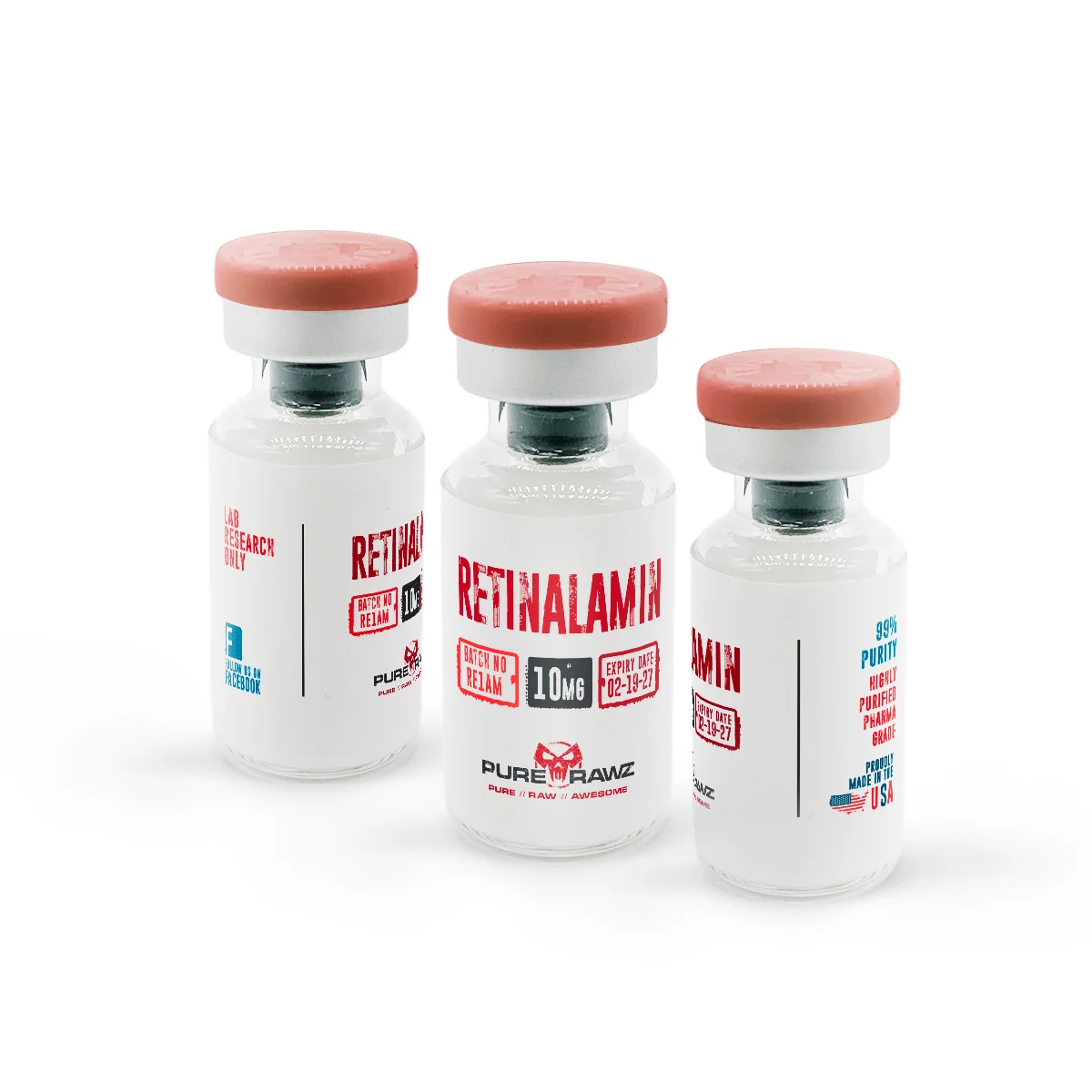
Retinalamin for Sale | 3rd-Party Tested 98% Pure | Purerawz Eye Research Peptide
What is Retinalamin?
Retinalamin is a peptide complex specifically developed for research focused on retinal health and visual function. Derived from retinal tissue, Retinalamin belongs to the family of organ-specific peptide bioregulators and has attracted growing scientific interest for its possible effects on retinal cell structure, neuronal activity, and tissue repair mechanisms in experimental models. Researchers studying retinal degeneration, diabetic retinopathy, and age-related visual conditions have identified Retinalamin as a valuable preclinical research tool for exploring how peptide bioregulators may influence ocular tissue at the cellular level. All products on Purerawzus.com are strictly intended for laboratory and research use only and are not approved by the FDA for human or veterinary use.
Retinalamin Chemical Properties
|
Property |
Details |
|
Product Name |
Retinalamin |
|
Peptide Sequence |
H-Glu (H-Lys-OH)-OH |
|
CAS Number |
17105-15-6 |
|
Molecular Formula |
C11H21N3O5 |
|
Molecular Weight |
275.30 g/mol |
|
Purity |
Greater than 98% |
|
Storage |
-20°C |
|
Shelf Life |
Up to 3 years under proper storage conditions |
|
Research Use |
Laboratory and Scientific Research Only |
|
Regulatory Status |
Not approved by the FDA for human or veterinary use |
How Does Retinalamin Work?
Scientific investigation suggests that Retinalamin may act on retinal cells by supporting their natural structural integrity and biological function. Researchers studying this compound in laboratory settings have observed several potential mechanisms through which Retinalamin may exert its effects:
|
Potential Mechanism |
Research Context |
|
Retinal Cell Metabolism Support |
May help maintain healthy cellular metabolic activity within retinal tissue |
|
Retinal Neuron Activity Support |
May support the activity and function of neurons within retinal tissue |
|
Blood Supply Improvement |
May possibly improve blood circulation to retinal tissue in preclinical models |
|
Retinal Cell Repair |
May influence repair processes in damaged or oxidatively stressed retinal cells |
|
Cellular Structure Support |
May help preserve the structural integrity of retinal cells in research settings |
Further investigation is required to fully establish the complete mechanism through which Retinalamin exerts its effects in retinal tissue research models.
Potential Benefits of Retinalamin in Research
Clinical and preclinical investigation into Retinalamin has identified several areas where this compound may offer significant research value:
|
Potential Benefit |
Research Context |
|
Retinal Cell Regeneration |
Studies suggest it may support retinal cell regeneration in experimental research models |
|
Cellular Stress Reduction |
May help reduce signs of oxidative and physical stress in retinal cells |
|
Visual Function Research |
Early findings suggest possible improvements in visual function in experimental models |
|
Retinal Degeneration Research |
Being explored for its possible role in slowing retinal cell degeneration |
|
Diabetic Retinopathy Research |
Studied for its possible protective effects on retinal blood vessels in diabetic models |
|
Eye Injury Research |
Being investigated for its potential to reduce retinal damage from physical injury |
|
Visual Acuity Research |
Some clinical trials suggest possible improvements in visual acuity outcomes |
Please note: All benefits listed are based on early stage preclinical and clinical research. This product is strictly intended for research purposes and is not approved for human or veterinary use.
Potential Research Areas of Retinalamin
|
Research Area |
Potential Focus |
|
Retinal Degeneration Research |
Studying its possible role in slowing retinal cell degeneration in preclinical models |
|
Age-Related Macular Degeneration Research |
Investigating its possible applications in AMD research and vision stabilization |
|
Retinitis Pigmentosa Research |
Exploring its possible role in studying retinitis pigmentosa progression in lab models |
|
Diabetic Retinopathy Research |
Studying its possible protective effects on retinal vasculature in diabetic research models |
|
Eye Injury and Oxidative Stress Research |
Investigating its possible role in reducing retinal damage from injury or oxidative stress |
|
Visual Function Recovery Research |
Exploring possible improvements in visual acuity and visual field in research settings |
|
Electroretinogram Research |
Studying its possible influence on retinal electrical response in ERG research models |
|
Photoreceptor Research |
Investigating its possible effects on rod and cone cell health and function |
|
Retinal Neuroprotection Research |
Studying its possible neuroprotective effects on retinal neurons in preclinical models |
|
Ocular Blood Flow Research |
Exploring its possible role in improving blood supply to retinal tissue |
Current State of Retinalamin Research
Retinal Degeneration Research
Studies exploring Retinalamin’s possible role in retinal cell degeneration have included research into conditions such as retinitis pigmentosa and age-related macular degeneration. Some research findings suggest it may help stabilize visual function or slow the progression of retinal cell deterioration in experimental settings. Further clinical investigation is required to confirm these observations.
Diabetic Retinopathy Research
Scientific investigation has explored how Retinalamin may support retinal vasculature and reduce tissue damage associated with elevated blood sugar levels in diabetic research models. Some clinical observations have reported possible improvements in both visual function and retinal structural integrity in these settings.
Eye Injury and Oxidative Stress Research
In experimental models Retinalamin has been evaluated for its potential to reduce retinal damage resulting from physical injury and oxidative stress exposure. These findings highlight its possible value as a protective agent in retinal tissue research.
Visual Function Recovery Research
Some clinical research findings suggest that Retinalamin may contribute to improved visual acuity and expanded visual field outcomes when studied alongside complementary treatments. Electroretinogram results from some studies have indicated improved retinal electrical response following Retinalamin administration in research settings.
Where to Buy Retinalamin Online
Pure raws is your trusted source for research-grade Retinalamin. Every purchase comes with a Certificate of Analysis confirming peptide identity, purity, and concentration for full research compliance. We offer multiple secure payment options to make your ordering process seamless and straightforward. Visit our how to pay page for a complete step by step guide to all available payment methods and checkout instructions.
|
Feature |
Details |
|
Purity |
Greater than 98% verified purity |
|
Testing |
Independent third-party lab tested |
|
Documentation |
Certificate of Analysis (COA) included with every order |
|
Shipping |
Free international shipping on orders over $100 |
|
Payment Options |
Multiple secure payment methods available |
|
Support |
24/7 expert customer support |
Is Retinalamin Legal?
Retinalamin is legal for research purposes in certain regions. The FDA has not approved it for human or veterinary use. Researchers must ensure full compliance with all applicable local laws and institutional research guidelines before purchasing or using this compound.
Frequently Asked Questions
Is There Clinical Proof of Retinalamin’s Effectiveness?
Some studies support its proposed mechanism of action in laboratory environments. However more extensive clinical research is needed to fully establish its safety profile and long-term effectiveness across all research applications.
Is Retinalamin Approved for Human Consumption?
No. The FDA has not approved Retinalamin for human or veterinary use. Purerawzus.com supplies this compound strictly for laboratory and scientific research purposes only.
What Side Effects Have Been Observed With Retinalamin?
Preliminary research observations have included mild allergic reactions, redness, and swelling in some research settings. As Retinalamin remains under active investigation its complete side effect profile has not yet been fully established. Further scientific investigation is required.
What is the Shelf Life of Retinalamin?
Under proper storage conditions Retinalamin typically maintains stability for up to three years from the date of manufacture. Maintaining appropriate storage conditions is essential for preserving compound potency throughout its shelf life.
How Should Retinalamin be Stored?
Store Retinalamin at -20°C in a cool dry place away from direct sunlight and moisture. Proper storage conditions are critical for maintaining compound quality and research effectiveness throughout your study period.
Disclaimer
All information on this page is provided for educational purposes only and does not constitute medical or professional advice. Products are for laboratory and research use only. By ordering you agree to our Terms and Conditions. Contact us at sales@purerawzus.com for any concerns.
All products are for laboratory and research purposes only and are not intended for veterinary or human use.
Be the first to review “Retinalamin”
Related products
Peptides
Peptides
Peptides
Peptides
Peptides
Peptides
Peptides
Peptides
Reviews
There are no reviews yet.