
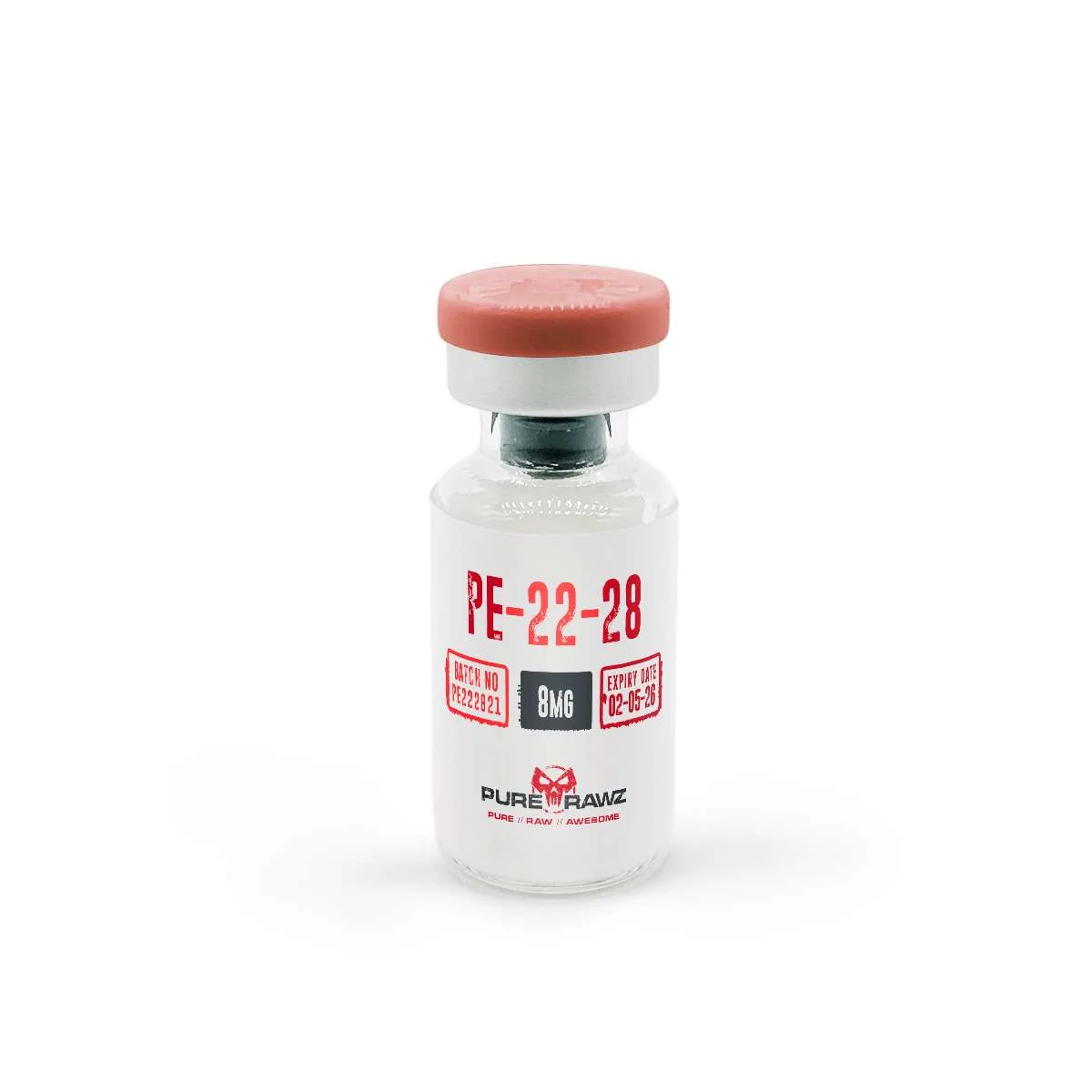
PE-22-28
Price range: $60.00 through $75.00
1st and 3rd Party Verified for 99% Purity Free Shipping on Orders Over $100+
PE-22-28 Peptide for Sale | 3rd-Party Tested 95% Pure | Purerawz
What is PE-22-28?
The search for research compounds capable of influencing brain chemistry through novel pathways has led scientists to an increasingly studied class of TREK-1 channel modulators. PE-22-28 sits at the forefront of this emerging research area.
PE-22-28 is a synthetic derivative of spadin, a naturally occurring peptide secreted from sortilin, a protein involved in neuronal signaling and brain function regulation. As a TREK-1 (TWIK-Related potassium channel) antagonist PE-22-28 works by blocking a specific potassium channel pathway linked to mood regulation, brain cell activity, and neurological function in preclinical research models. Its origins in spadin research and its targeted TREK-1 blocking mechanism have made it a compound of growing scientific interest across depression, neurodegeneration, and cognitive function research disciplines. All peptides on Purerawzus.com are strictly intended for laboratory and research use only and are not approved by the FDA for human or veterinary use.
PE-22-28 Chemical Properties
|
Property |
Details |
|
Product Name |
PE-22-28 |
|
Synonyms |
Gly-Val-Ser-Trp-Gly-Leu-Arg-OH |
|
CAS Number |
1801959-12-5 |
|
Molecular Formula |
C35H55N11O9 |
|
Molecular Weight |
773.89 g/mol |
|
Purity |
Greater than or equal to 95% |
|
Storage |
-20°C protected from light and moisture |
|
Origin |
Synthetic derivative of spadin, sortilin-derived peptide |
|
Research Use |
Laboratory and Scientific Research Only |
|
Regulatory Status |
Not approved by the FDA for human or veterinary use |
How Does PE-22-28 Work?
PE22-28 operates through a targeted and well-defined mechanism centered on TREK-1 channel antagonism. Scientific investigation has identified the following key mechanisms through which PE-22-28 may exert its effects in preclinical research models:
|
Potential Mechanism |
Research Context |
|
TREK-1 Channel Blockade |
Blocks the TREK-1 potassium channel pathway linked to brain and mood regulation |
|
Neuronal Activity Enhancement |
Blocking TREK-1 may increase brain cell activity and strengthen neuronal connections |
|
Neurogenesis Support |
Preclinical studies suggest possible support for new brain cell growth and development |
|
Synaptic Connection Improvement |
May improve connections between brain cells in experimental research models |
|
Mood Regulation Pathway Modulation |
Being studied for its possible influence on mood regulation and brain chemistry pathways |
|
Muscle Activity Regulation |
TREK-1 modulation may influence muscle activity and relaxation in laboratory settings |
Potential Benefits of PE-22-28 in Research
Scientific investigation into PE22-28 has highlighted several areas where this TREK-1 antagonist may offer significant preclinical research value:
|
Potential Benefit |
Research Context |
|
Depression Research |
Being studied for its possible role in reducing stress and depression-related markers |
|
Neuronal Activity Research |
May improve brain cell activity and strengthen neuronal connections in research models |
|
Neurogenesis Research |
Studies suggest possible support for new brain cell growth in preclinical settings |
|
Mood and Emotional Stability Research |
Being explored for its possible influence on mood regulation and emotional stability |
|
Neuroprotection Research |
May protect brain cells from damage in experimental research models |
|
Post-Stroke Recovery Research |
Being investigated for possible effects on neuronal recovery in post-stroke research models |
|
Neurodegenerative Research |
Being studied for possible relevance in neuronal survival and growth research models |
|
Muscle Function Research |
Being explored for its possible influence on muscle activity regulation through TREK-1 |
Please note: All benefits listed are based on early stage preclinical research. This product is strictly intended for research purposes and is not approved for human or veterinary use.
Potential Research Areas of PE-22-28
|
Research Area |
Potential Focus |
|
Depression Research |
Studying TREK-1 blockade and its possible influence on mood regulation pathways |
|
Neurogenesis Research |
Investigating its possible role in supporting new brain cell growth and development |
|
Neuroprotection Research |
Exploring its possible protective effects on brain cells against neurological damage |
|
Post-Stroke Research |
Studying its possible effects on neuronal recovery and brain function after stroke models |
|
Neurodegenerative Disease Research |
Investigating whether TREK-1 modulation influences neuronal survival in degeneration models |
|
Cognitive Function Research |
Exploring its possible influence on memory and cognitive performance in research models |
|
TREK-1 Channel Research |
Studying TREK-1 potassium channel modulation and its downstream neurological effects |
|
Anxiety and Stress Research |
Investigating its possible applications in anxiety and stress pathway research models |
|
Muscle Function Research |
Exploring how TREK-1 channel blockade may influence muscle activity and relaxation |
|
PTSD Research |
Studying its possible applications in trauma and stress-related neurological research |
PE-22-28 Research Applications
Depression and Mood Research
PE-22-28 is being actively investigated in depression research models for its possible influence on brain cell activity and neuronal connection strength. By blocking the TREK-1 channel researchers are studying whether this mechanism influences mood regulation pathways and brain chemistry balance in experimental settings. Current investigations are exploring its possible role as a novel research tool for studying treatment-resistant depression mechanisms.
Post-Stroke Recovery Research
Brain function changes observed following stroke events have created significant scientific interest in compounds that may support neuronal recovery. PE22-28 is being studied in experimental post-stroke models for its possible effects on neuronal recovery outcomes and brain function restoration. These findings remain under active evaluation and require further scientific confirmation.
Neurodegenerative Disease Research
Researchers investigating neurodegenerative conditions are exploring whether TREK-1 channel modulation through PE-22-28 may influence neuronal survival, growth, and function in preclinical research models. This area of investigation represents one of the more frontier applications of PE22-28 in current scientific research.
Muscle Function Research
Beyond neurological research applications PE22-28 is also being explored for its possible influence on muscle activity regulation through TREK-1 channel modulation in laboratory settings. Researchers are investigating whether this mechanism has broader physiological relevance in muscle-related research models.
Where to Buy PE-22-28 Online
Purerawzus.com supplies COA-verified, high-purity research compounds with fast USA shipping on every order. Every purchase is backed by an independent Certificate of Analysis confirming peptide identity, purity, and concentration for complete research compliance and documentation. We offer multiple secure payment options to make your ordering experience seamless and straightforward. Visit our how to pay page for a complete step by step guide to all available payment methods and secure checkout instructions.
|
Feature |
Details |
|
Purity |
Greater than or equal to 95% verified purity |
|
Testing |
Independent third-party lab tested |
|
Documentation |
Certificate of Analysis (COA) included with every order |
|
Shipping |
Free international shipping on orders over $100 |
|
Payment Options |
Multiple secure payment methods available |
|
Support |
24/7 expert customer support |
Is PE-22-28 Legal?
The FDA has not approved PE22-28 as a drug for human or veterinary use. It is available for scientific research purposes in applicable regions. Researchers must verify all applicable local laws and institutional research guidelines before purchasing or using this compound.
Frequently Asked Questions
Is PE-22-28 Safe for Human Consumption?
No. The FDA has not approved PE-22-28 for human or veterinary use. Purerawzus.com supplies this compound strictly for laboratory and scientific research purposes only.
Is PE-22-28 Available as a Medical Treatment?
No. PE22-28 currently remains in the research and preclinical investigation phase. It is not approved for medical use and is being studied exclusively in preclinical and experimental research models for its potential biological effects.
What Side Effects Have Been Observed With PE-22-28?
The complete safety profile and potential side effects of PE-22-28 have not yet been fully established as the compound remains under active scientific investigation. Researchers are encouraged to follow all applicable laboratory safety protocols when handling this compound.
How Should PE-22-28 be Stored?
Store PE22-28 at -20°C protected from light and moisture at all times. Proper storage conditions are critical for maintaining compound quality, purity, and research effectiveness throughout your study period.
What is the Difference Between PE-22-28 and Spadin?
PE-22-28 is a synthetically engineered derivative of spadin, designed to optimize TREK-1 antagonist activity in research models. While spadin is a naturally occurring peptide derived from sortilin, PE22-28 has been structurally modified to potentially improve research applicability and biological activity in experimental settings.
Disclaimer
All information on this page is provided for educational purposes only and does not constitute medical or professional advice. Products are for laboratory and research use only. By ordering you agree to our Terms and Conditions. Contact us at sales@purerawzus.com for any concerns.
| strength | 8mg, 10mg |
|---|
Be the first to review “PE-22-28”
Related products

Peptide Unconstituted;Peptides
Peptide Unconstituted;Peptides
Peptide Unconstituted;Peptides
Peptide Unconstituted;Peptides
Peptide Unconstituted;Peptides
Peptide Unconstituted;Peptides
Peptide Unconstituted;Peptides
Peptide Unconstituted;Peptides
Reviews
There are no reviews yet.