
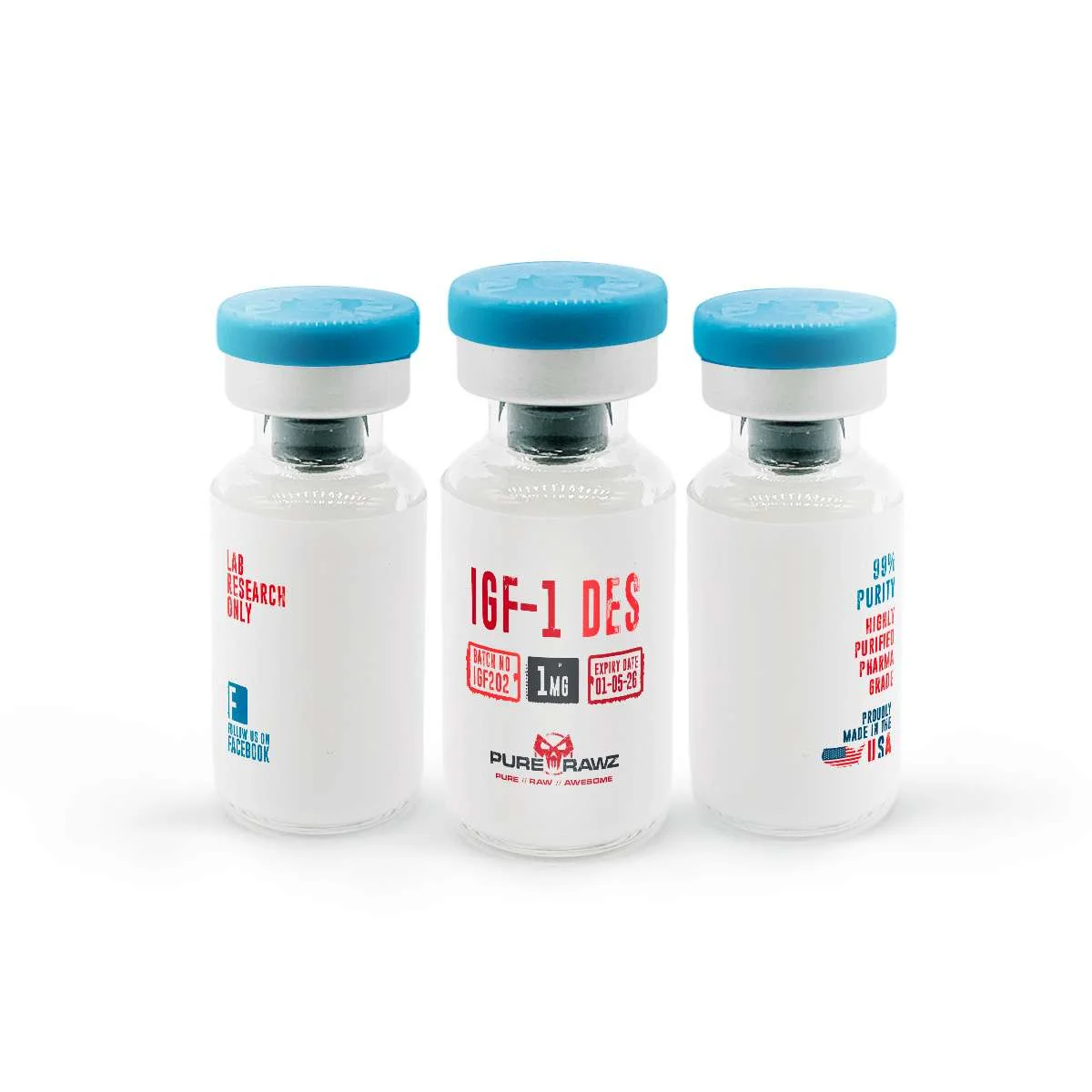
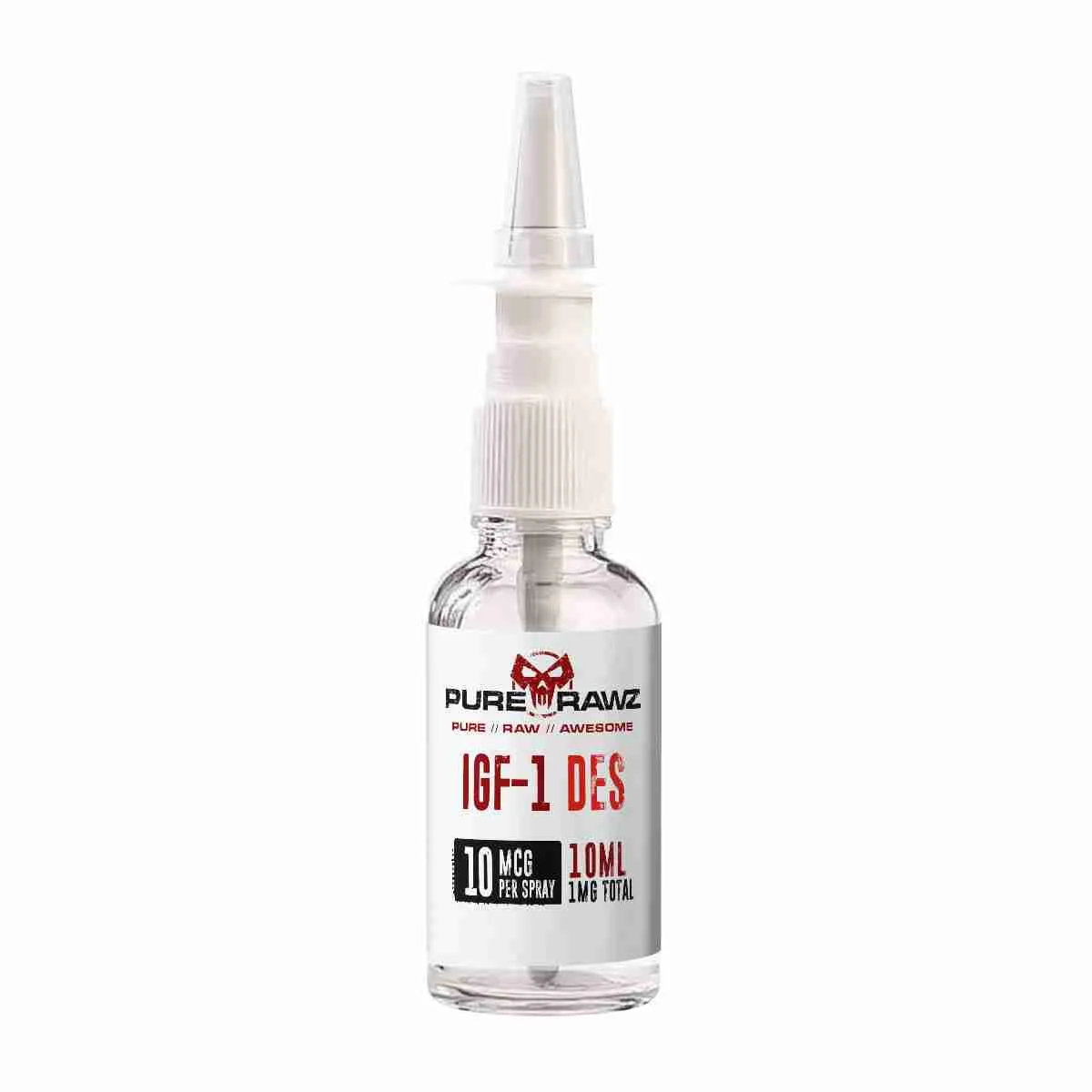
IGF-1 DES for Sale | Purerawz Cell Growth and Muscle Research Peptide
What is IGF-1 DES?
IGF-1 DES, formally known as Insulin-like Growth Factor-1 DES 1-3, is a modified laboratory-produced variant of the naturally occurring IGF-1 hormone. This modified form is slightly shorter than its parent hormone, lacking the first three amino acids found in standard IGF-1. This structural difference is believed to allow the compound to act more rapidly and with greater localized activity in experimental settings, making it a particularly valuable tool for targeted cellular research.
Researchers study IGF1 DES in controlled laboratory environments for its possible role in supporting cell growth, tissue recovery, protein synthesis, and metabolic function across various experimental models. This compound is strictly intended for controlled research and educational use only and is not approved for human or animal use.
IGF1 DES Chemical Profile
|
Property |
Details |
|
Product Name |
IGF-1 DES |
|
Full Name |
Insulin-like Growth Factor-1 DES 1-3 |
|
CAS Number |
946870-92-4 |
|
Molecular Formula |
C331H515N97O98S7 |
|
Molecular Weight |
7,312.4 g/mol |
|
Peptide Sequence |
Tyr-Pro-Thr-Ile-Cys-Ser-Leu-Tyr-Arg-Met-Asp-Lys-Glu-Cys-Ala-Tyr-Leu-Val-His-Ala-Phe (70 amino acids) |
|
Synonyms |
Insulin-like Growth Factor-1 DES(1-3), IGF-1 DES |
|
Research Use |
Laboratory and Scientific Research Only |
|
Regulatory Status |
Not approved by the FDA for human or animal use |
IGF-1 DES vs Standard IGF-1
Understanding the key distinction between IGF-1 DES and standard IGF-1 is important for researchers working with this compound:
|
Feature |
Standard IGF-1 |
IGF-1 DES |
|
Amino Acid Length |
Full length sequence |
Missing first three amino acids |
|
Speed of Action |
Standard onset |
May act faster in experimental models |
|
Activity Type |
Systemic growth factor activity |
More localized activity in research models |
|
Research Application |
Broad IGF-1 pathway research |
Targeted cellular and tissue research |
|
Half-Life in Studies |
Longer duration |
Approximately 20 to 30 minutes |
How Does IGF-1 DES Work?
In laboratory studies IGF-1 DES is believed to function by binding to IGF1 receptors located on cell surfaces. This binding may trigger key intracellular signaling pathways including PI3K/Akt and MAPK, both of which are associated with cell survival, growth, and repair processes. Through these pathways researchers have observed several potential biological effects in experimental models:
|
Potential Mechanism |
Research Context |
|
Protein Synthesis Support |
May increase protein synthesis and reduce protein breakdown in muscle cell studies |
|
Local Tissue Regeneration |
May stimulate localized tissue repair and regeneration in experimental models |
|
Cell Communication Support |
Could improve cellular communication to support recovery processes in research settings |
|
Receptor Binding Activity |
Binds to IGF-1 receptors to trigger downstream growth and repair signaling cascades |
Potential Benefits of IGF-1 DES in Research
Early stage scientific investigation has highlighted several areas where IGF-1 DES may offer value in preclinical and experimental research settings:
|
Potential Benefit |
Research Context |
|
Lean Mass Research |
Early findings suggest it may influence lean mass markers in experimental models |
|
Fat Metabolism Research |
Studies indicate possible influence on fat utilization and energy balance |
|
Tissue Healing Research |
Being explored for its potential role in healing and repair across various research models |
|
Bone Density Research |
Early investigations suggest possible effects on bone density and strength markers |
|
Insulin Sensitivity Research |
Some studies indicate possible influence on insulin sensitivity in research settings |
|
Muscle Cell Research |
May support protein synthesis and reduce breakdown in muscle cell laboratory studies |
|
Cellular Recovery Research |
Being studied for its possible role in improving cell communication during recovery |
Please note: All benefits listed are based on early stage preclinical research. This peptide is strictly intended for research purposes and is not approved for human or animal use.
Potential Research Areas of IGF1 DES
|
Research Area |
Potential Focus |
|
Muscle Growth Research |
Studying its possible role in lean mass development and protein synthesis in cell studies |
|
Tissue Regeneration Research |
Investigating its potential to stimulate localized tissue repair in experimental models |
|
Metabolic Research |
Exploring its possible influence on fat usage and energy balance in research settings |
|
Bone Health Research |
Studying its potential effects on bone density and structural strength markers |
|
Insulin Sensitivity Research |
Investigating its possible role in improving insulin response in research models |
|
Cell Proliferation Research |
Examining how IGF-1 DES influences cell growth and survival signaling pathways |
|
Neuroprotection Research |
Exploring its possible effects on brain cell health and neural tissue in lab models |
|
Anti-Aging Research |
Studying its potential role in cellular repair and age-related tissue changes |
|
Wound Healing Research |
Investigating its possible applications in tissue recovery and wound repair research |
Where to Buy IGF-1 DES for Research
Purerawzus.com is your trusted source for verified research-grade IGF-1 DES. Every batch is independently third-party tested and comes with a full Certificate of Analysis confirming purity, concentration, and compound identity. We offer multiple secure payment options to make your ordering experience seamless and straightforward. Visit our how to pay page for a complete step by step guide to all available payment methods and checkout instructions.
|
Feature |
Details |
|
Testing |
Independent third-party lab tested |
|
Documentation |
Certificate of Analysis (COA) included with every order |
|
Shipping |
Free international shipping on orders over $100 |
|
Payment Options |
Multiple secure payment methods available |
|
Support |
24/7 expert customer support |
Frequently Asked Questions
What is the difference between IGF-1 DES and standard IGF-1?
IGF-1 DES is a truncated version of IGF-1 that is missing its first three amino acids. This structural difference allows it to act faster and with greater localized activity in experimental settings, making it a more targeted tool for specific cellular research applications.
How long does IGF-1 DES remain active in research studies?
In laboratory studies IGF1 DES has demonstrated a relatively short duration of activity of approximately 20 to 30 minutes, producing strong but localized effects within that window. This characteristic makes it particularly useful for targeted research protocols.
Is IGF1 DES approved for human use?
No. The FDA has not approved IGF-1 DES for human or animal use. Purerawzus.com supplies this compound strictly for laboratory and scientific research purposes only.
Disclaimer
All information provided on this page is strictly for educational and scientific purposes and does not constitute medical or professional advice of any kind. Every product available through Purerawzus.com is designated solely for laboratory and research use. Clinical studies must be conducted under appropriate Institutional Review Board oversight while preclinical work must comply with IACUC guidelines in accordance with the Animal Welfare Act. Customers are strongly encouraged to independently verify all information prior to completing a purchase. By placing your order you confirm agreement with our Terms and Conditions. For any product concerns or questions please contact us directly at sales@purerawzus.com.
Purerawzus.com sells all products for laboratory and research purposes only and does not intend them for veterinary or human use.
| form | Nasal spray, peptides |
|---|---|
| strength | 10mcg/spray=1mg, 1mg |
Be the first to review “IGF-1 DES”
Related products
Peptides
Peptides
Peptides
Peptides
Peptides
Peptides
Peptides
Peptides
Reviews
There are no reviews yet.