
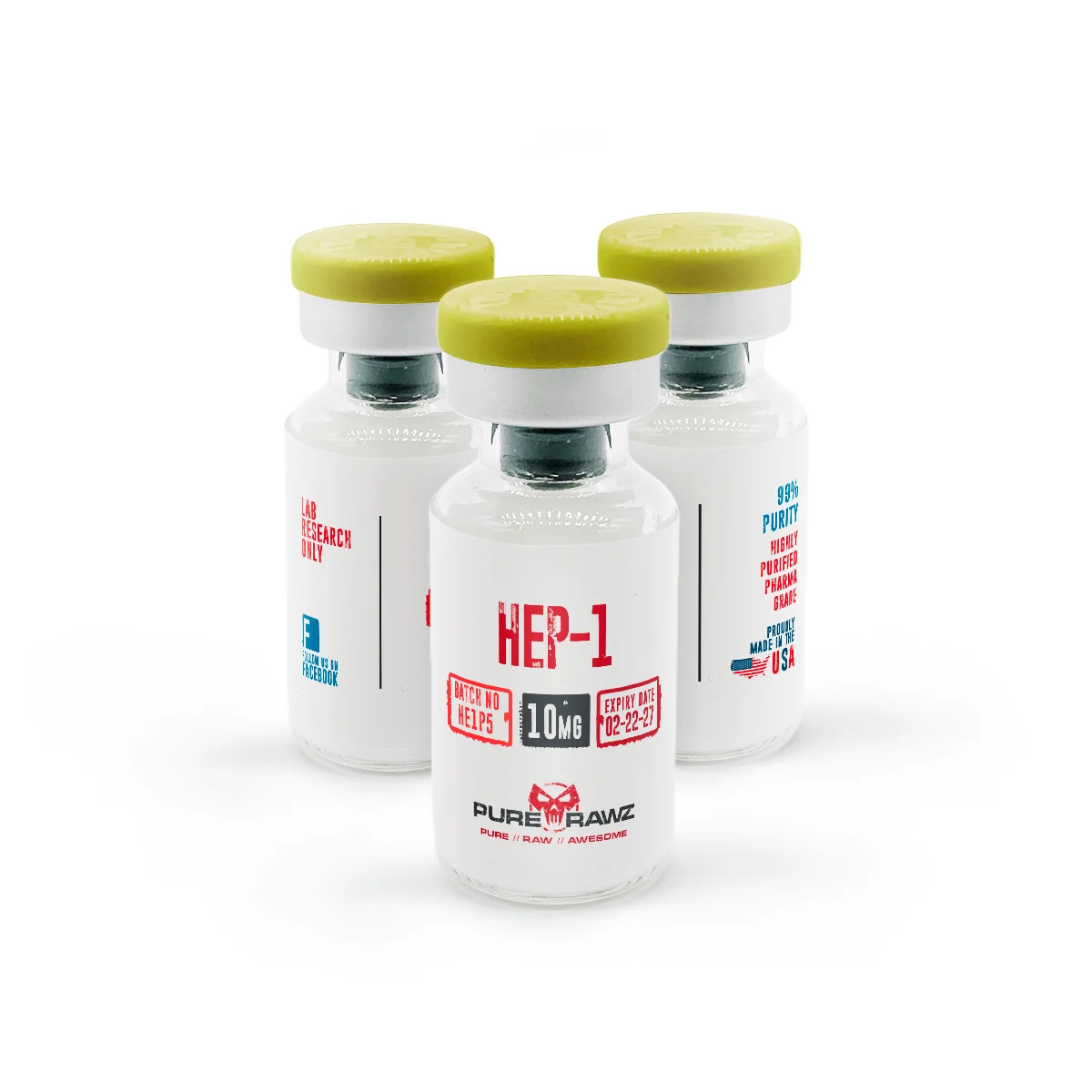
HEP-1 Human Ezrin Peptide for Sale | Purerawz Immune Research Compound
What is HEP-1?
HEP-1, formally known as Human Ezrin Peptide, is a synthetic 14-amino-acid peptide derived from a functional region of the cellular protein ezrin. Researchers across multiple scientific disciplines study HEP-1 for its possible influence on immune signaling pathways, antiviral defense mechanisms, and inflammatory response modulation in preclinical models. As a compound involved in viral infection and immune response research, HEP-1 has attracted growing scientific interest as a valuable laboratory research tool. All products on Purerawzus.com are strictly intended for laboratory and research use only and are not approved for human or veterinary use.
HEP-1 Chemical Properties
|
Property |
Details |
|
Product Name |
HEP-1 |
|
Full Name |
Human Ezrin Peptide |
|
Type |
Synthetic 14-Amino-Acid Peptide |
|
Origin |
Derived from the cellular protein Ezrin |
|
Primary Research Focus |
Immunomodulation, Antiviral Defense, Inflammation |
|
Storage |
-80°C for long-term, -20°C for short-term |
|
Research Use |
Laboratory and Scientific Research Only |
|
Regulatory Status |
Not approved by the FDA for human or veterinary use |
How Does HEP-1 Work?
Researchers studying HEP-1 across various experimental models have observed that this compound may function by regulating immune and inflammatory signaling at the molecular level. Specifically, HEP-1 may modulate the expression and activity of key cytokines including TNF-alpha, IL-6, and IL-1B, all of which play vital roles in inflammation and cellular stress responses in preclinical models.
By influencing these cytokine pathways, HEP-1 provides researchers with a tool to explore its possible effects on immune balance and tissue responses in controlled laboratory settings. Scientists are also investigating the downstream molecular cascades involved in inflammation control that HEP-1 may interact with, making it a compound of broad interest in immunological and antiviral research.
Potential Benefits of HEP-1 in Research
Early stage scientific investigation has identified several areas where HEP-1 may offer significant value in preclinical and experimental research settings:
|
Potential Benefit |
Research Context |
|
Immunomodulatory Effects |
Studies suggest it may regulate immune signaling and influence immune response balance |
|
Antiviral Defense Research |
Some studies demonstrate it may support antiviral defense mechanisms in preclinical models |
|
Anti-Inflammatory Potential |
May modulate inflammatory responses by influencing key cytokine activity |
|
Cytokine Regulation |
Studied for its possible effects on TNF-alpha, IL-6, and IL-1B expression in research models |
|
Oxidative Stress Protection |
Being explored for its potential role in protecting cells from oxidative stress |
|
Tissue Regeneration Research |
May influence genes involved in cellular stress responses and tissue regeneration |
|
Gene Expression Research |
Studied for its possible impact on genes linked to immune signaling and cellular health |
Please note: All benefits listed are based on early stage preclinical research. This product is strictly intended for research purposes and is not approved for human or veterinary use.
Potential Research Areas of HEP-1
|
Research Area |
Potential Focus |
|
Immunomodulation Research |
Studying its potential to regulate cytokine expression and influence immune responses |
|
Antiviral Research |
Investigating its possible role in supporting antiviral defense in preclinical models |
|
Inflammation Research |
Examining how HEP-1 may modulate inflammatory pathways and cytokine activity |
|
Oxidative Stress Research |
Exploring its possible protective role against oxidative stress in cellular research |
|
Gene Expression Research |
Studying its impact on genes involved in immune signaling and cellular stress responses |
|
Tissue Regeneration Research |
Investigating its potential influence on tissue repair and regeneration in research models |
|
Viral Infection Research |
Exploring its possible applications in studying immune responses to viral infections |
|
Molecular Signaling Research |
Studying downstream molecular cascades involved in inflammation control |
Handling and Storage Guidelines
Proper handling and storage of HEP-1 are essential for preserving compound integrity throughout long-term research use:
|
Condition |
Recommendation |
|
Long-Term Storage |
Store powder at -80°C for up to 2 years |
|
Short-Term Storage |
Store at -20°C for up to 1 year |
|
Vial Sealing |
Always reseal vials promptly after each use to prevent moisture exposure |
|
Environment |
Keep away from humid conditions at all times |
|
Handling |
Wear proper protective gloves and eyewear in all lab settings |
|
Expiration |
Do not use after the expiration date shown on packaging |
|
Transportation |
Always check airport and customs regulations before traveling with HEP-1 |
Why Buy HEP-1 from Purerawzus.com?
At Pure raws, we take full accountability for every research compound we supply. HEP-1 is sourced from top-tier manufacturers and undergoes rigorous quality testing including HPLC analysis and first and third-party verification before it ever reaches your lab. Here is what you get when you choose us:
|
Feature |
Details |
|
Purity Verification |
HPLC tested and independently verified |
|
Testing |
First and third-party lab tested for complete quality assurance |
|
Documentation |
Certificate of Analysis (COA) included with every order |
|
Shipping |
Fast and reliable delivery with free international shipping on orders over $100 |
|
Payment Options |
Multiple secure payment methods available for your privacy and convenience |
|
Support |
24/7 expert customer support team ready to assist |
Ready to place your order? Visit our how to pay page for a complete step by step guide to our available payment methods and secure checkout options.
Frequently Asked Questions
What is HEP-1 used for in research?
Researchers use HEP-1 to study its potential to regulate cytokine expression, influence immune responses, support antiviral defense mechanisms, and protect cells from oxidative stress in controlled laboratory settings.
Is HEP-1 approved for human use?
No. The FDA has not approved HEP-1 for human or veterinary use. Purerawzus.com supplies this compound strictly for laboratory and research purposes only.
How should HEP-1 be stored?
Store HEP-1 powder at -80°C for long-term stability of up to two years, or at -20°C for short-term storage of up to one year. Always keep vials tightly sealed and away from moisture and humidity to maintain compound integrity.
Disclaimer
All information on this page is provided strictly for educational purposes and does not represent medical or professional advice of any kind. Every product available through Purerawzus.com is designated solely for laboratory and scientific research use. Clinical studies must be conducted under appropriate Institutional Review Board oversight while preclinical work must comply with IACUC guidelines in accordance with the Animal Welfare Act. Customers are strongly encouraged to independently verify all information prior to completing a purchase. By placing your order you confirm agreement with our Terms and Conditions. For any product concerns or questions please contact us directly at sales@purerawzus.com.
Purerawzus.com sells all products for laboratory and research purposes only and does not intend them for veterinary or human use.
References
Holms, R. D., & Ataullakhanov, R. I. (2021). Ezrin Peptide Therapy from HIV to COVID: Inhibition of Inflammation and Amplification of Adaptive Anti-Viral Immunity. International Journal of Molecular Sciences, 22(21), 11688. https://doi.org/10.3390/ijms222111688
HEP-1. (2020). MedchemExpress.com.
Be the first to review “HEP-1”
Related products
Peptides
Peptides
Peptides
Peptides
Peptides
Peptides
Peptides
Peptides
Reviews
There are no reviews yet.