
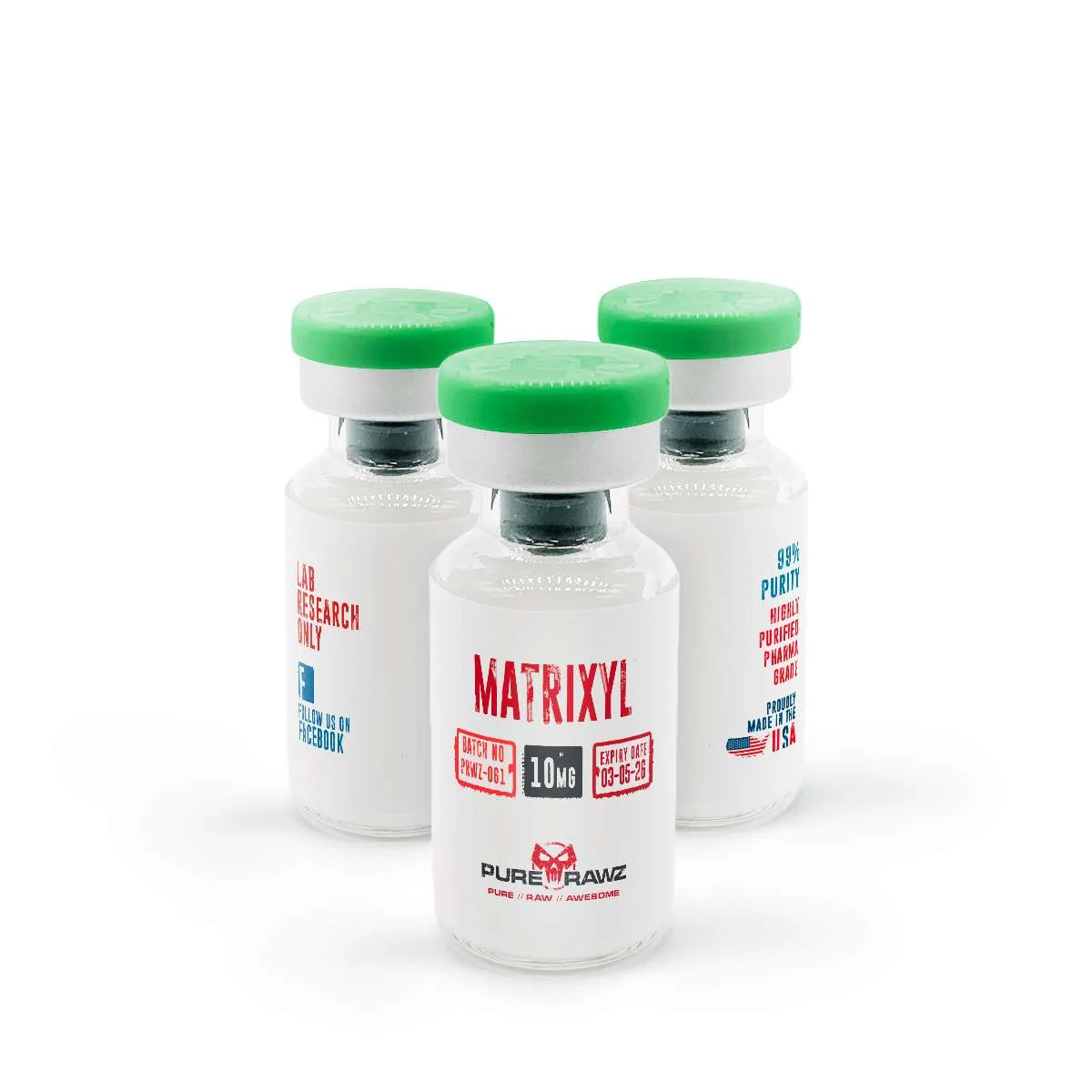

Matrixyl 10mg for Sale | Purerawz Collagen Research Peptide
What is Matrixyl?
Matrixyl is a synthetic peptide actively studied in skincare and dermatological research for its potential role in reducing visible signs of aging at the cellular level. Composed of a short chain of amino acids, Matrixyl has attracted significant scientific interest for its possible ability to stimulate the production of collagen, elastin, and other structural proteins responsible for maintaining skin firmness and smoothness. As a research compound Matrixyl continues to be explored across multiple laboratory disciplines focused on skin biology, tissue repair, and cellular aging. All products on Purerawzus.com are strictly intended for laboratory and research use only and are not approved for human or veterinary use.
Matrixyl Chemical Properties
|
Property |
Details |
|
Product Name |
Matrixyl |
|
CAS Number |
214047-00-4 |
|
Molecular Formula |
C39H75N7O10 |
|
Molecular Weight |
Approximately 802 g/mol |
|
Purity |
95% |
|
Solubility |
Water soluble and soluble in organic solvents |
|
Appearance |
White to off-white powder |
|
Stability |
Sensitive to heat and pH variations |
|
Storage |
Cool dry place away from direct sunlight |
|
Research Use |
Laboratory and Scientific Research Only |
|
Regulatory Status |
Not approved by the FDA for human or veterinary use |
Types of Matrixyl
Researchers should be aware that Matrixyl peptide exists in several distinct forms, each with unique research applications:
|
Type |
Description |
|
Matrixyl (Palmitoyl Pentapeptide-4) |
The original and most widely studied form of Matrixyl |
|
Matrixyl 3000 |
A combination of Palmitoyl Tetrapeptide-7 and Palmitoyl Oligopeptide |
|
Matrixyl Synthe’6 |
An advanced form known as Palmitoyl Tetrapeptide-38, designed to stimulate six major skin-building components |
How Does Matrixyl Work?
Researchers studying Matrixyl have identified several potential mechanisms through which this compound may exert its effects in laboratory settings. Matrixyl is thought to mimic the body’s natural repair signaling processes, prompting fibroblasts to support the production of key structural proteins including collagen and elastin. Through these mechanisms researchers can study how synthetic peptides may influence skin texture, cellular repair, and the reduction of age-related changes at the molecular level.
|
Potential Mechanism |
Research Context |
|
Fibroblast Signaling |
May signal fibroblasts to support collagen and elastin production in research models |
|
Collagen Synthesis Support |
Studied for its possible role in stimulating structural protein production in skin tissue |
|
Skin Repair Signaling |
May support natural skin repair processes in controlled laboratory settings |
|
Anti-Inflammatory Activity |
Some studies suggest possible inflammation-reducing effects though further research is needed |
|
Natural Repair Mimicry |
Thought to replicate natural tissue repair signals to improve skin texture in research models |
Potential Benefits of Matrixyl in Research
Early stage scientific investigation has identified several areas where Matrixyl may offer value in preclinical and experimental research settings:
|
Potential Benefit |
Research Context |
|
Fine Line and Wrinkle Research |
Studies suggest it may reduce the appearance of fine lines by stimulating collagen production |
|
Skin Firmness Research |
May improve skin firmness and elasticity in dermatological research models |
|
Skin Texture Research |
Early findings suggest possible improvements in overall skin texture and tone |
|
Skin Rejuvenation Research |
Being explored for its possible role in supporting overall skin appearance and renewal |
|
Antioxidant Research |
Preliminary findings suggest possible protection against oxidative stress and environmental damage |
|
Skin Hydration Research |
Early studies indicate possible improvements in skin hydration and moisture retention |
|
Photoaging Research |
Being investigated for its possible protective effects against photoaging in research models |
Please note: All benefits listed are based on early stage preclinical research. This product is strictly intended for research purposes and is not approved for human or veterinary use.
Potential Research Areas of Matrixyl
|
Research Area |
Potential Focus |
|
Collagen Synthesis Research |
Studying how Matrixyl influences collagen production in fibroblast and skin cell research |
|
Anti-Aging Dermatology Research |
Investigating its possible role in reducing visible signs of aging in skin tissue research |
|
Wound Healing Research |
Exploring its possible applications in tissue repair and skin wound healing studies |
|
Antioxidant Research |
Studying its potential to protect skin cells from oxidative stress and environmental damage |
|
Skin Hydration Research |
Investigating its possible role in supporting natural moisturizing factors in skin research |
|
Extracellular Matrix Research |
Studying its potential influence on extracellular matrix proteins and structural skin components |
|
Photoaging Research |
Examining its possible protective effects against UV-related skin aging in research models |
|
Fibroblast Research |
Investigating how Matrixyl interacts with fibroblast cells to influence skin protein production |
Matrixyl and Fine Line Research
Scientific studies suggest that Matrixyl may demonstrate the ability to reduce the appearance of fine lines and wrinkles in research models. By potentially stimulating collagen production, it may help support skin structure and promote cellular repair and renewal processes. These findings have positioned Matrixyl as a compound of growing interest in dermatological and cosmetic research focused on aging skin biology.
Matrixyl and Antioxidant Research
Preliminary research into Matrixyl’s antioxidant properties suggests it may offer cellular protection against environmental damage and oxidative stress in research settings. Scientists are investigating whether these properties may also extend to protecting against photoaging, though further clinical investigation is required to confirm these findings.
Matrixyl and Skin Hydration Research
Early laboratory studies suggest that Matrixyl may help improve skin hydration by potentially supporting natural moisturizing factors present within skin tissue. These preliminary findings indicate possible reductions in cellular dryness and improvements in skin smoothness in experimental models. Further research is needed to confirm these observations.
Where to Buy Matrixyl 10mg Online
Pure raws is your trusted source for research-grade Matrixyl 10mg. Every product we supply is independently verified and backed by a full Certificate of Analysis confirming identity, purity, and concentration. We offer multiple secure payment options to make your ordering experience smooth and straightforward. Visit our how to pay page for a complete step by step guide to all available payment methods and checkout instructions.
|
Feature |
Details |
|
Purity |
95% verified purity |
|
Testing |
Independent third-party lab tested |
|
Documentation |
Certificate of Analysis (COA) included with every order |
|
Shipping |
Free international shipping on orders over $100 |
|
Payment Options |
Multiple secure payment methods available |
|
Support |
24/7 expert customer support |
Frequently Asked Questions
What are the different types of Matrixyl available for research?
There are three primary forms of Matrixyl used in research settings. Matrixyl, also known as Palmitoyl Pentapeptide-4, is the original form. Matrixyl 3000 combines Palmitoyl Tetrapeptide-7 and Palmitoyl Oligopeptide for broader research applications.
NOTE: Matrixyl Synthe’6, known as Palmitoyl Tetrapeptide-38, is a more advanced form designed to study six major skin-building components simultaneously.
Is Matrixyl approved for human use?
No. The FDA has not approved Matrixyl for human or veterinary use. Purerawzus.com supplies this compound strictly for laboratory and research purposes only.
What potential side effects have been observed in research models?
Preliminary research observations have included possible irritation or sensitivity in some research settings. As Matrixyl remains under active scientific investigation its complete safety profile has not yet been fully established. Further clinical research is required.
How should Matrixyl be stored?
Store Matrixyl in a cool dry place away from direct sunlight and moisture. Please note that this compound is sensitive to heat and pH variations so maintaining stable storage conditions is essential for preserving compound integrity throughout your research.
Disclaimer
All information on this page is provided strictly for educational purposes and does not represent medical or professional advice of any kind. Every product available through Purerawzus.com is designated solely for laboratory and scientific research use. Clinical studies must be conducted under appropriate Institutional Review Board oversight while preclinical work must comply with IACUC guidelines in accordance with the Animal Welfare Act. Customers are strongly encouraged to independently verify all information prior to completing a purchase. By placing your order you confirm agreement with our Terms and Conditions. For any product concerns or questions please contact us directly at sales@purerawzus.com.
Purerawzus.com sells all products for laboratory and research purposes only and does not intend them for veterinary or human use.
Be the first to review “Matrixyl”
Related products
Peptides


Peptides
Peptides

Peptides
Peptides
Peptides
Peptides
Peptides
Reviews
There are no reviews yet.